
 Instagram
  Facebook
  TikTok
 Gas Generation in Ukraine: What the Government Is Changing — and Whether It Will Deliver Results
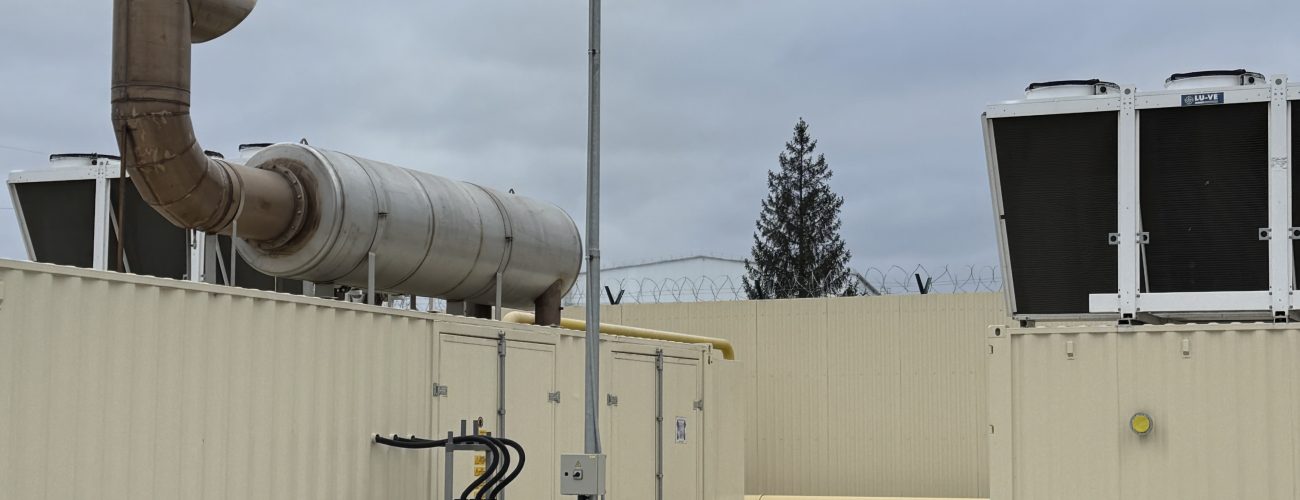
Ukraine is accelerating the development of gas-fired generation — one of the key pillars of energy security during wartime. Following a series of meetings with businesses, Prime Minister Denys Shmyhal announced a number of measures aimed at removing barriers for investors and speeding up the deployment of new capacity.
This comes amid significant losses to the power system: Russian attacks have severely damaged Ukraine’s flexible generation capacity, particularly thermal and hydropower facilities.
Why Gas Generation Has Become Critical
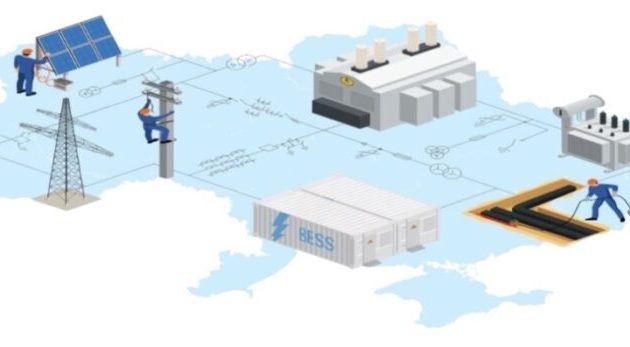
Ukraine’s energy system is rapidly evolving toward a decentralized model. Instead of relying on large power plants that are vulnerable to attacks, the country is shifting toward networks of smaller distributed facilities.
Gas-fired installations play a central role because they:
- can start up quickly and provide flexible generation,
- operate locally near cities and industrial facilities,
- serve as backup power for critical infrastructure.
In practice, this means creating hundreds of smaller power facilities instead of dozens of large centralized plants — significantly increasing system resilience.
What the Government Is Proposing
The announced measures are intended to address long-standing bottlenecks that have slowed the sector’s development.
1. Reduced Bureaucracy
Simplifying the placement of generation facilities near gas pipelines and accelerating grid connection procedures is considered essential.
Previously, complex approval processes could delay projects for months. Now, the regulator — including the National Energy and Utilities Regulatory Commission of Ukraine — has already shortened approval timelines, reduced paperwork, and lowered technical connection barriers.
2. Preferential Gas Pricing (PSO Mechanism)
One of the government’s main tools is a preferential gas pricing mechanism for cogeneration projects.
Without discounted gas prices, many projects would not be economically viable. However, there is a major challenge: the PSO mechanism is often temporary and lacks long-term guarantees.
This creates the key concern for investors — uncertainty.
3. Reduced Financial Pressure
Another important decision is the suspension of gas distribution charges when facilities are not operating — for example, after infrastructure attacks.
Previously, businesses were required to pay distribution fees even without actual gas consumption.
4. Protection of New Energy Facilities
The government is currently compiling lists of facilities that will receive priority protection.
However, the main question remains what this protection will actually include:
- physical protection (air defense systems),
- infrastructure recovery support,
- or financial risk insurance.
At this stage, the framework is still being developed.
The Main Challenge: Financing and Risk
Despite these initiatives, the fundamental barriers remain:
- large debts within the electricity market,
- delayed payments to energy producers,
- high wartime risks,
- lack of long-term guarantees.
Industry experts openly acknowledge that without stable economic conditions, large-scale investment will remain limited.
What About Investor Interest?
Interest exists — both from Ukrainian businesses and international partners.
The European Union and international financial institutions are already prepared to:
- provide risk-sharing mechanisms,
- offer loans and grants,
- support new generation projects.
However, investors are waiting for one key factor: predictable rules.
Conclusion
The government’s recent initiatives represent more than political statements — they are an attempt to systematically unlock gas generation through:
- simplified procedures,
- economic incentives,
- reduced operational risks.
But this is only the first stage.
A real breakthrough will only be possible under three critical conditions:
- a stable and long-term PSO mechanism;
- resolution of debt problems in the energy market;
- real wartime investment protection mechanisms.
Without these elements, gas generation may remain a promising concept — but not a scalable solution for Ukraine’s energy future.