
 Instagram
  Facebook
  TikTok
 1.9 GW of New Energy Capacity: How Ukrainian Banks Are Financing the Recovery of the Power System
Ukraine’s energy recovery is advancing on several fronts simultaneously. Damaged facilities need to be restored, lost capacity must be replaced, and the power system itself must become more resilient to future attacks.
Ukrainian banks are becoming one of the key sources of financing for this process.
Over the past two years, banks that joined the memorandum on the recovery of Ukraine’s energy infrastructure have financed projects to restore and develop generation capacity totaling 1.9 GW.
This is a significant scale—comparable to the capacity of a substantial part of Ukraine’s energy infrastructure. Importantly, the figure covers a broad range of technologies rather than a single type of generation.
From Solar and Wind to Gas-Fired Generation
Bank financing has supported projects across multiple segments of the energy sector, including:
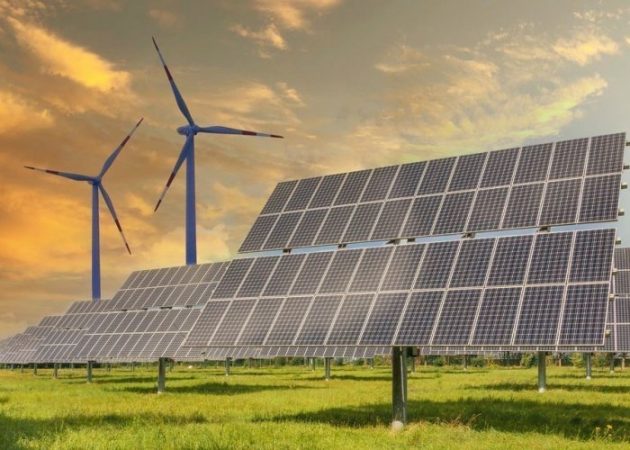
- Solar power generation;
- Wind energy;
- Hydropower;
- Bioenergy;
- Gas-fired generation;
- The purchase of generators and backup power sources.
This technological diversity is critical for Ukraine, as its power system cannot rely on a single universal solution.
Renewable energy enables the rapid expansion of distributed generation. Gas-fired power plants can provide more flexible electricity production, while generators help businesses and critical infrastructure facilities remain operational during emergency power outages.
Together, these solutions are contributing to a more diversified energy system—one in which the failure or damage of a single element does not necessarily disrupt an entire region.
Financing Goes Beyond Power Generation
Energy storage is another important area of investment.
Over the past two years, banks have financed energy storage projects and the modernization of heating equipment with a combined capacity of 751 MW.
This is particularly important for Ukraine’s power system today.
Energy storage systems make it possible to store electricity during periods of surplus and use it when demand increases or generation declines. In the future, BESS could become one of the key tools for balancing the power system, particularly as solar and wind generation continue to expand.
The modernization of heating equipment is also strategically important. District heating companies, boiler houses, and other thermal infrastructure facilities require upgrades to reduce their reliance on outdated equipment and improve operational efficiency.
UAH 52 Billion in Financing for Businesses
Over the past two years, banks have issued more than 5,000 loans to businesses, totaling UAH 52 billion.
This indicates that energy investments are gradually becoming an integral part of Ukrainian companies’ business strategies.
Businesses are investing in their own power generation capacity in order to:
- Reduce dependence on the centralized grid;
- Ensure uninterrupted production;
- Minimize the risks associated with emergency power outages;
- Lower electricity costs over the long term;
- Strengthen their energy independence.
For most businesses, an energy project is no longer simply an investment in cost savings. It has become a matter of maintaining operational continuity amid an unstable power system.
As a result, more companies are viewing solar power plants, gas-fired generation, energy storage systems, and other solutions as essential components of their own infrastructure.
Banks Are Becoming Part of the Energy Transition
The scale of this financing points to an important shift: banks are no longer simply providers of credit to traditional businesses.
In wartime conditions, the financial sector is becoming an active participant in the recovery of critical infrastructure.
Lending enables energy projects to be implemented faster than would be possible through companies’ own funds alone. At the same time, the energy sector is becoming an increasingly strategic area of investment for banks.
This process, however, is not limited to restoring what has been destroyed.
Step by step, Ukraine is building a new type of power system—one that is more decentralized, flexible, and technology-driven.
It will bring together large-scale power plants, distributed generation, energy storage systems, gas-fired units, renewable energy sources, and localized energy solutions for businesses and households.
More than 5,000 business loans totaling UAH 52 billion, approximately 20,000 household loans totaling UAH 4 billion, 1.9 GW of financed generation capacity, and another 751 MW in energy storage and heating equipment modernization projects.
These figures represent more than financial transactions.
They translate into new power plants, energy storage systems, backup power sources, modernized facilities, and thousands of businesses and households investing in their own energy resilience.
Ukraine’s energy system is being rebuilt not only from the top down—through major state-backed and international projects—but increasingly from the bottom up, with businesses, communities, and households playing an active role.
And bank financing is becoming one of the key drivers of this transformation.