
 Instagram
  Facebook
  TikTok
 Ukraine’s solar energy sector has already offset its wartime losses. And this may be one of the most important energy stories of the past few years

While most attention remains focused on the daily challenges facing Ukraine’s power system, some numbers are changing the bigger picture.
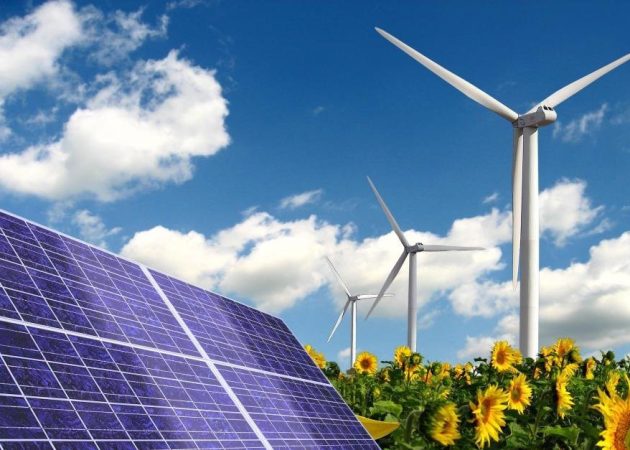
According to analysis by Ekonomichna Pravda, Ukraine is expected to add more than 4 GW of new solar generation between 2023 and 2026. That is already more than the capacity lost since 2022 due to occupation and Russian attacks.
What makes this even more significant is that this recovery has been driven not only by major investors, but also by:
- Private households
- Ukrainian businesses
- Thousands of individual energy solutions that, collectively, have produced results that seemed almost impossible just a few years ago.
The picture is somewhat more complicated for wind energy.
Before the full-scale invasion, Ukraine had approximately 2 GW of installed wind capacity, but nearly 80% of it ended up in occupied territories or was damaged.
Yet the sector has continued to grow despite the war:
- 491 MW of new wind capacity was commissioned in 2023–2025.
- Another 130 MW was added in the first quarter of 2026 alone.
- The target for 2026 is 500–600 MW of new capacity.
Behind these numbers lies something much bigger than megawatts.
They show that Ukraine’s energy sector is not simply recovering from attacks — it is changing its structure.
Distributed generation, private investment, household participation, and renewable energy are becoming more than temporary responses to a crisis. They are emerging as a new model for Ukraine’s energy future.
There is still a long way to go, particularly in wind generation and energy storage. But one conclusion is already clear:
Ukraine is not simply rebuilding what was lost or destroyed. Step by step, it is building a different energy system — more resilient, modern, and decentralized.
Which number surprises you more: 4+ GW of new solar capacity — or the fact that Ukrainian households and businesses have become some of the key drivers of this recovery?