
 Instagram
  Facebook
  TikTok
 A Multidimensional Energy Future: How the Global Energy Landscape Is Changing
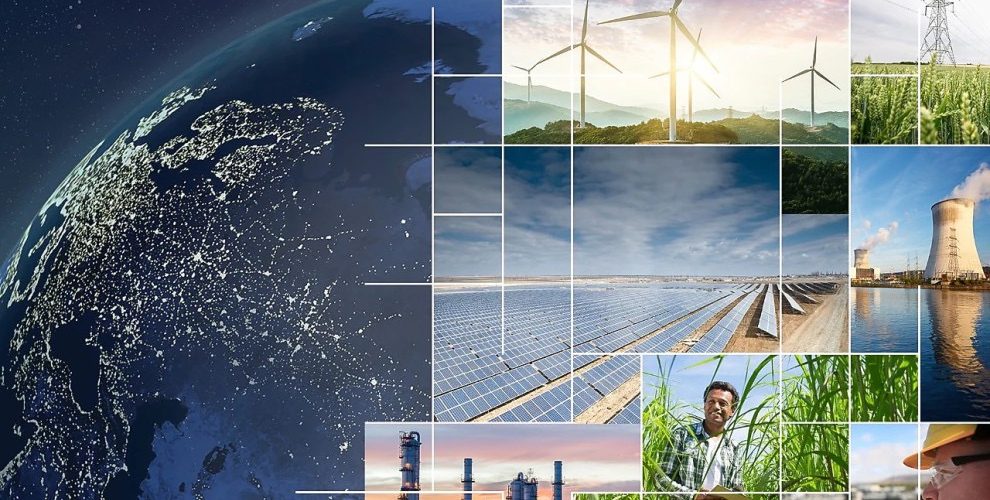
The global energy sector is entering a new era — one defined by multidimensional development. The traditional view of a smooth, linear energy transition is no longer valid.
The End of the “Linear” Energy Transition
Just a few years ago, there was a widespread assumption that the world would gradually phase out fossil fuels in favor of renewable energy. Reality, however, has proven to be far more complex:
- countries have different economic capabilities,
- priorities vary (security, affordability, climate),
- geopolitics and crises continuously reshape direction.
As a result, a multi-speed, multi-technology transition is emerging, where each country follows its own path.
The Energy “Trilemma”: Three Core Priorities
Modern energy systems must balance three key objectives:
- energy security,
- affordability,
- sustainability.
Following the energy crisis of 2021–2022 and the war in Ukraine, many countries have shifted their focus toward security and affordability — often placing them above climate goals.
One World, Different Realities
One of the main challenges is the gap between countries:
- developed economies prioritize decarbonization,
- developing countries focus on energy access and economic growth.
At the same time, nearly 800 million people worldwide still lack access to electricity.
For a large part of the world, the primary goal is not green technology — but basic electrification.
Fossil Fuels Are Not Disappearing
Despite rapid renewable growth:
- fossil fuels still dominate the global energy mix,
- they are expected to remain a significant share even by 2060,
- demand for oil and gas continues due to economic expansion.
A sharp decline in hydrocarbons is unlikely — the transition will be evolutionary rather than revolutionary.
Technology Is Reshaping the System
At the same time, the energy sector is undergoing rapid transformation:
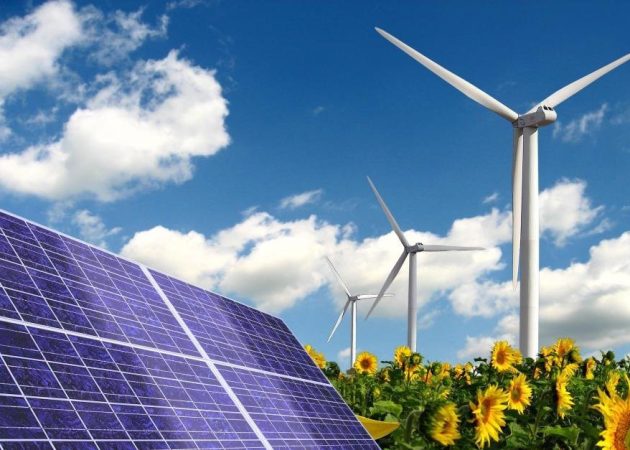
- solar and wind energy are scaling quickly,
- energy storage is becoming critical,
- electric vehicles are expanding globally,
- hydrogen and CCUS (carbon capture, utilization, and storage) are gaining importance.
It is expected that 70–75% of new capacity by 2050 will come from renewable sources.
A New Driver: Artificial Intelligence
An unexpected driver of demand is emerging — AI and data centers:
- rapidly increasing electricity consumption,
- growing pressure on power systems,
- rising demand for stable, reliable generation.
This creates a paradox: even as clean energy expands, overall energy demand continues to rise.
Future Scenarios
According to S&P Global, several potential pathways are emerging:
- Adaptation — economic growth with continued reliance on fossil fuels
- Renaissance — accelerated expansion of clean energy
- Fracture — a fragmented world with uneven transition speeds
Under any scenario, the energy transition remains complex and uneven.
Conclusion
The world is not moving toward a single “green” future, but toward a multidimensional energy system, where:
- multiple energy sources coexist,
- countries move at different speeds,
- balancing economics and climate becomes central.
The energy transition of the future is not a straight line — it is a complex system shaped by trade-offs, technologies, and policy decisions.